
DENTAL IMPLANTS IN PHOENIX & SCOTTSDALE, AZ
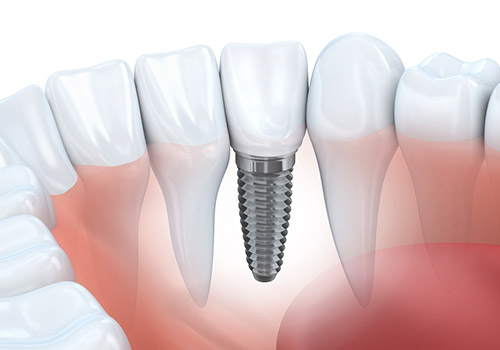
Dental implants replace missing teeth with new ones that look, feel and work like your own. At AZPerio, implants are placed by periodontists. These specialists treat the gums and bone that hold an implant in place for years to come.
We start by finding out why you lost the tooth. Then we plan your treatment with your general dentist and place the implant. Once your crown is in, we keep checking on the implant for three years at no charge.
We see implant patients in Phoenix, Scottsdale, Gilbert and Ahwatukee.
Why Choose AZPerio for Dental Implants?
We start with why the tooth was lost
Gum disease is the leading cause of tooth loss in adults, and it's more common than most people realize. About 42% of U.S. adults 30 and older have it. Among adults 65 and older, it's about 60%.1 The infection that loosens natural teeth can also attack the bone around an implant.
So before we place anything, we look at the health of your whole mouth. If gum disease played a part in losing the tooth, we treat it to ensure we stop the progress of this disease to hopefully prevent additional tooth loss.
AZPerio at a Glance
4100+
implants placed each year
70%+
of implants loaded the same day
6
Board-Certified/Board-Eligible periodontists
3 years
of complimentary follow-up care
Why Choose a Periodontist for Dental Implant Surgery?
General dentists can place implants; however, many refer the surgery to a specialist. After dental school, a periodontist completes three more years of residency focused on the gums, the jawbone and implant surgery. That training matters most when a case involves bone loss, gum disease or receding gums.
Our periodontists trained in residency programs at Ohio State, Indiana University, the Mayo Clinic, Temple University and the University of Iowa. Five are board-certified Diplomates of the American Board of Periodontology. Dr. Rubinov is board-eligible, which means specialty training is complete and the board exams are the next step. Board certification requires passing written and oral exams beyond residency.
The AZPerio Advantage
Specialist-Led Treatment
Every implant is placed by a periodontist trained in the gums, jawbone and supporting structures an implant depends on.
Precise Planning and Surgery
Cone beam CT shows us your bone, sinuses and nerves in 3D, so we can plan exactly where each implant goes. During surgery, piezoelectric instruments make precise cuts that help preserve bone, with less bleeding and faster healing.
Proven Implant Systems
We use implants from Straumann, Nobel Biocare and Astra Tech (Dentsply Sirona). We choose among them based on the quality of your bone, the implant site and the tooth your dentist will restore.
Peer-Reviewed Care
Our specialists meet regularly to review cases together, so every patient gets the benefit of the whole team's experience.
Laser Treatment for Failing Implants
When infection threatens an implant, we can treat it with the laser-assisted peri-implantitis procedure (LAPIP™), using the PerioLase® MVP-7 laser to clean the infected pocket and help save the implant.
Care That Continues After Surgery
Your implant comes with a warranty and three years of complimentary follow-up visits, starting after your crown is placed, to check the implant, gums and bone.
Dental Implant Treatment Options
Traditional Dental Implants
An implant replaces the root of a missing tooth. After it bonds with the jawbone, it supports a crown, bridge or denture. Treatment can replace one tooth, several teeth or a full arch.
Same-Day Teeth and Immediate Implant Placement
More than 70% of the implants we place are loaded the same day, so most patients leave with a tooth attached, usually a temporary. In many cases we can also place the implant at the same visit as the extraction. Most of these patients get their permanent crown from their general dentist 8 to 12 weeks later, with fewer visits overall.
Not everyone is a candidate. Bone quality, implant stability and infection all affect whether a same-day approach is safe for you. We check all three with 3D imaging and an exam before recommending a timeline.
The All-on-4® Treatment Concept
All-on-4® is for patients who are missing all their upper or lower teeth, or whose remaining teeth can't be saved. It replaces a full arch of teeth with a set supported by four implants. The two back implants are angled to avoid the sinus in the upper jaw and the nerve in the lower jaw. Angling them often means no bone grafting is needed.
We plan the case digitally from a CT scan, so your new teeth are ready on the day of surgery, and you leave with a full arch in place. Once the implants have bonded with the bone, the temporary arch is replaced with a stronger final one.
Bone Grafting, Sinus Lifts and Ridge Augmentation
An implant needs enough healthy bone to hold it. When gum disease or a long-missing tooth has worn that bone away, we can rebuild it.
- Bone grafting adds bone or graft material where the jaw has thinned. Your body gradually replaces the graft with its own bone.
- A sinus lift raises the floor of the sinus and adds bone in the upper back jaw, where bone is often too thin for an implant.
- Ridge augmentation rebuilds the ridge of the jaw after a tooth has been missing long enough for the bone to shrink. That restores support for the implant and the natural shape of the gums.
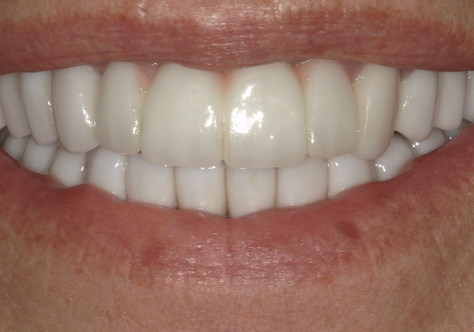
Implant Results
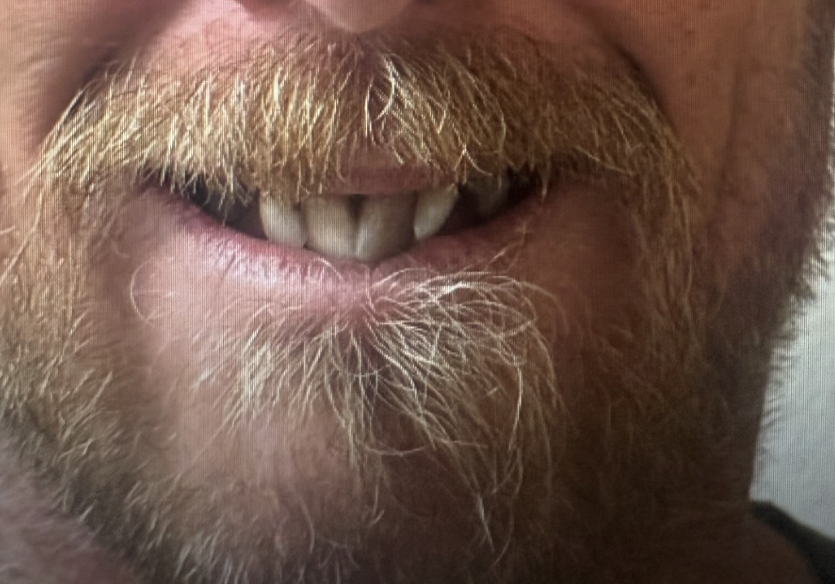
Before
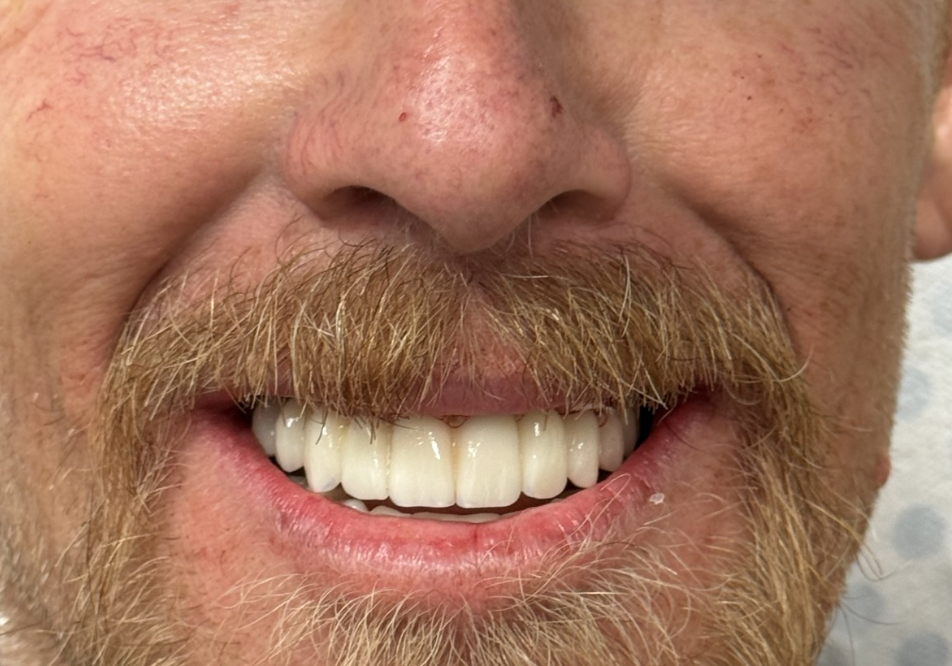
After
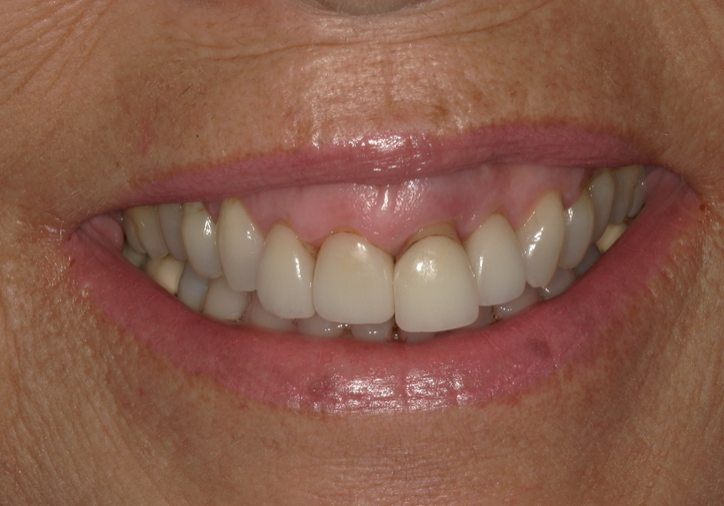
Before
After
Your Implant Investment: Fees, Insurance and Follow-Up Care
What's included in the fee
Most implant treatment plans include the consultation, imaging (usually a CT scan), extraction, bone graft and implant placement. Depending on your consultation, your plan may also include:
- Sedation. Many patients need only local anesthesia. We offer every level of sedation, including care from Certified Registered Nurse Anesthetists (CRNAs), when you'd like it or when it would make the procedure more comfortable.
- Membrane: a thin barrier placed over a graft to guide healing.
- Platelet-rich fibrin (PRF): a healing gel made from a small sample of your own blood.
- GEM 21S®: a growth factor combined with graft material to help new bone and tissue form.
Your general dentist places the final crown, which is billed separately.
We recommend the most conservative plan that will last. That isn't always the least expensive option. Over time, the most expensive treatment is usually the one that has to be redone.
Warranty and three years of follow-up care
[WARRANTY: Jeff's paragraph goes here.]
For three years after your crown is placed, you'll see our hygienist once a year at no charge. Each visit checks the health of the implant and the gums and bone around it. That matters because the infection that causes gum disease can also develop around an implant. Caught early, it's much easier to treat.
Insurance and out-of-network care
AZPerio is only contracted with Delta Dental as a Premier Provider, but we accept patients and payments from all dental benefits plans. Many plans pay for out-of-network care. Before treatment, we'll estimate your share of the cost. We submit claims to your dental plan for you. If your plan pays more than we estimated, we'll promptly refund the difference.
Your plan may base its payment on its own "usual, customary and reasonable" (UCR) fee instead of our fee. Any difference is your responsibility, and we account for it in your estimate.
Why we're out of network: network contracts require deep fee discounts. Since 2021, the cost of dental equipment and supplies and the wages of dental office staff have each risen about 23%, while insurance reimbursement hasn't kept pace.² Staying out of network means we plan your treatment around what you need, not around what a plan will pay.
Ways to pay
- Prepayment discount: pay your full estimated portion when you schedule, and we'll take 5% off it.
- HSA and FSA funds can be used for eligible treatment.
- Financing: our team can walk you through available financing options.
Choosing your surgeon
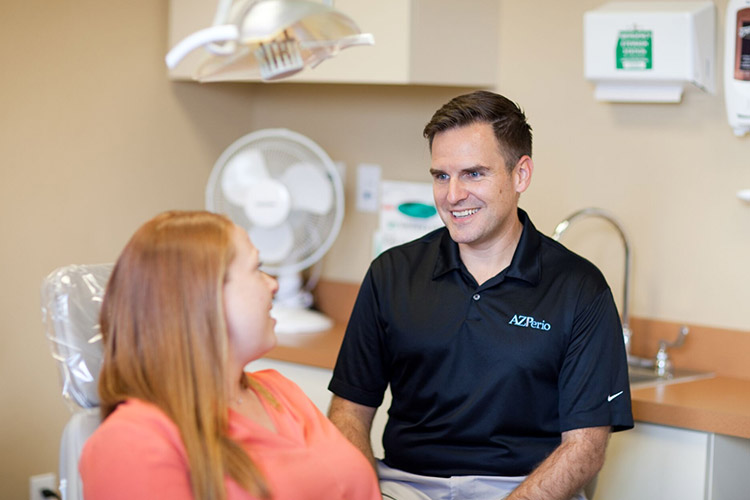
Missing one tooth, all of them, or getting a second opinion? Talk with a specialist about your options. We see implant patients in Phoenix, Scottsdale, Gilbert and Ahwatukee.
Dental Implant FAQs
Schedule an Appointment
Missing one tooth, all of them, or getting a second opinion? Talk with a specialist about your options. We see implant patients in Phoenix, Scottsdale, Gilbert and Ahwatukee.
Sources
- National Institute of Dental and Craniofacial Research, Periodontal Disease in Adults (Age 30 or Older): https://www.nidcr.nih.gov/research/data-statistics/periodontal-disease
- American Dental Association Health Policy Institute, State of the U.S. Dental Economy, Q2 2026, as reported by Becker's Dental Review. If possible, link to the ADA HPI report page directly.